Chinese
 Pусский язык
 Français
 Español
1. What is a thermal container liner?
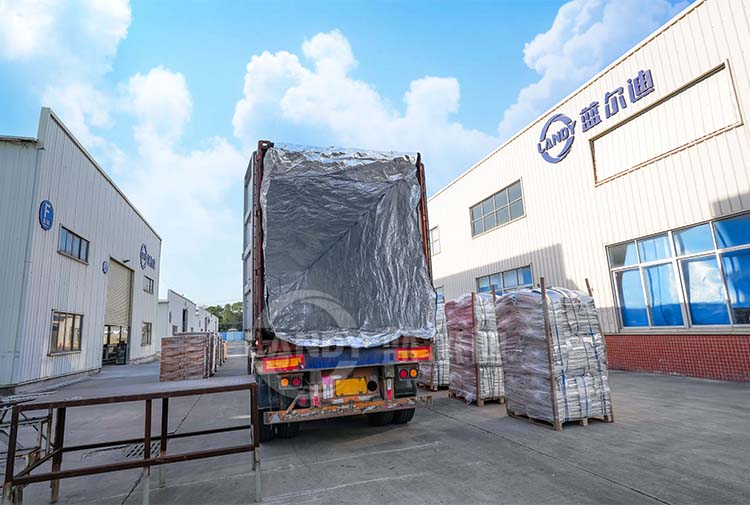
A: A thermal container liner is a protective, insulating inner layer placed inside a standard sea or shipping container (such as 20-foot or 40-foot units) to shield cargo from extreme temperature swings, condensation, and moisture damage.
2. How do thermal liners work?
A: Radiant Barrier: Most liners use a reflective aluminum and polyethylene blend that reflects over 95% of radiant heat away from the cargo (or keeps chilled temperatures trapped inside).
Conduction & Convection Block: Multi-layer or air-bubble designs create a thermal air gap that slows down heat transfer.
3. What commodities require thermal liners?
A: Thermal liners are commonly used for temperature- and moisture-sensitive goods, including:
Coffee beans and cocoa
Soybeans, corn, rice, and pasta
Dried fruits, nuts, salt, and sugar
Pharmaceuticals and chemicals
4.What temperature range do they protect against?
A: High-quality container liners typically protect cargo from ambient external temperatures ranging from -25°C to +60°C (-13°F to 140°F), though performance depends on transit duration and whether cold packs or dry ice are integrated.
5.Do you have temperature fluctuation test data?
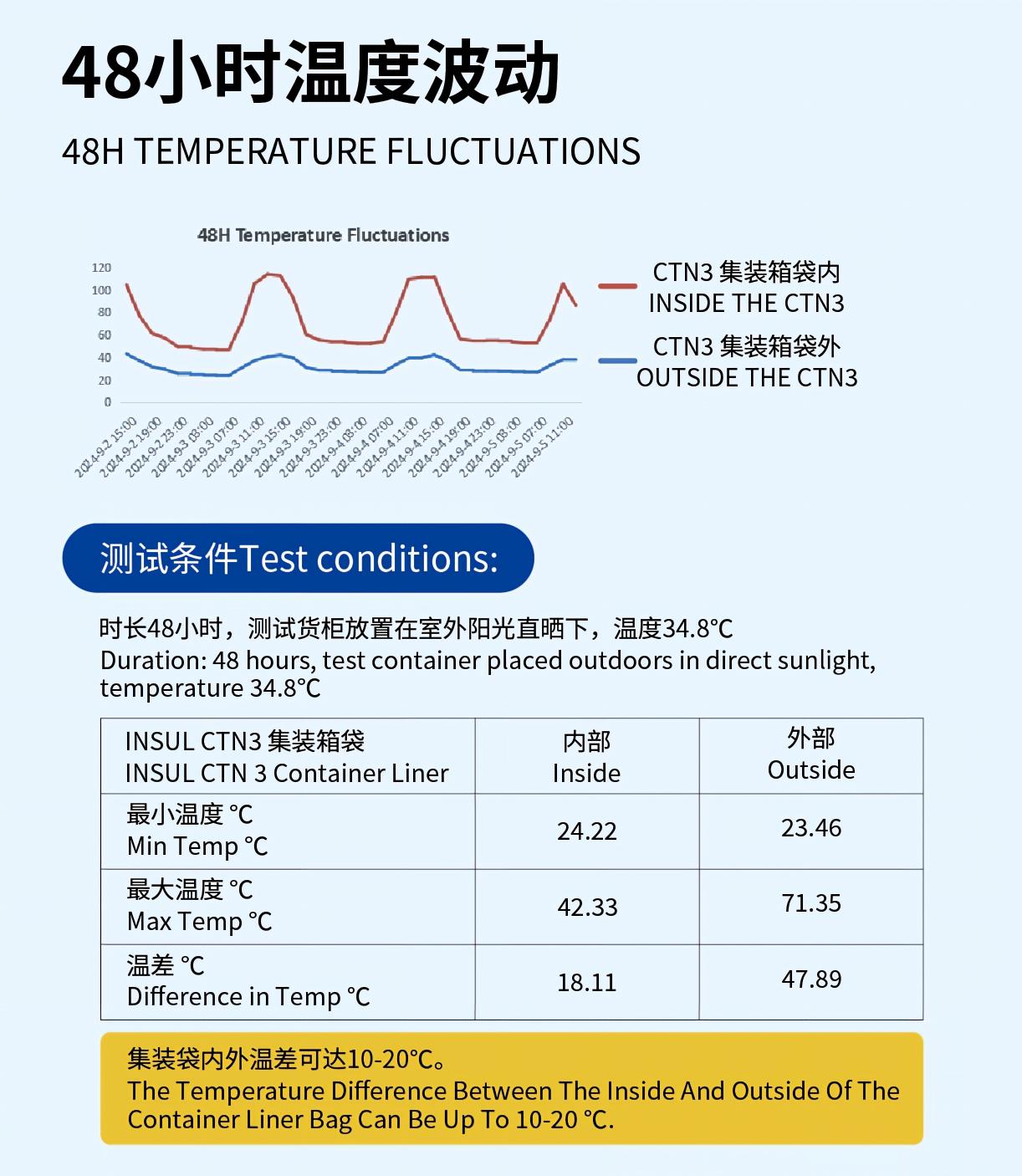
A: The container was placed outdoors under direct sunlight. The average ambient temperature was 34.89°C, with a test duration of 48 hours. The temperature difference between the inside and outside of the container liner can reach 10–20°C.
6.How are container liners installed?
A: Sized specifically for 20-foot, 40-foot, or high-cube containers.
Hung or attached using integrated hooks, lashing points, or ropes along the container walls and ceiling.
7.What are the packaging weight and dimensions?
A: CTN-4 for 40HQ: Weight 23.5kg, Dimensions 0.65x0.49x0.29m
CTN-4 for 20GP: Weight 12.5kg, Dimensions 0.65x0.48x0.18m